Stone instantly adds warmth, texture and a sense of permanence, whether it's on a fireplace, an accent wall, a kitchen island or the front of your home. The question most homeowners ask is whether to use natural stone veneer or cultured (manufactured) stone.
Syracuse Construction installs both. Here's how they compare and where each one shines.
- Natural vs. cultured stone at a glance
- Where stone veneer works best
- Interior installations
- Exterior installations in Central NY
- Choosing a stone installer
- Frequently asked questions
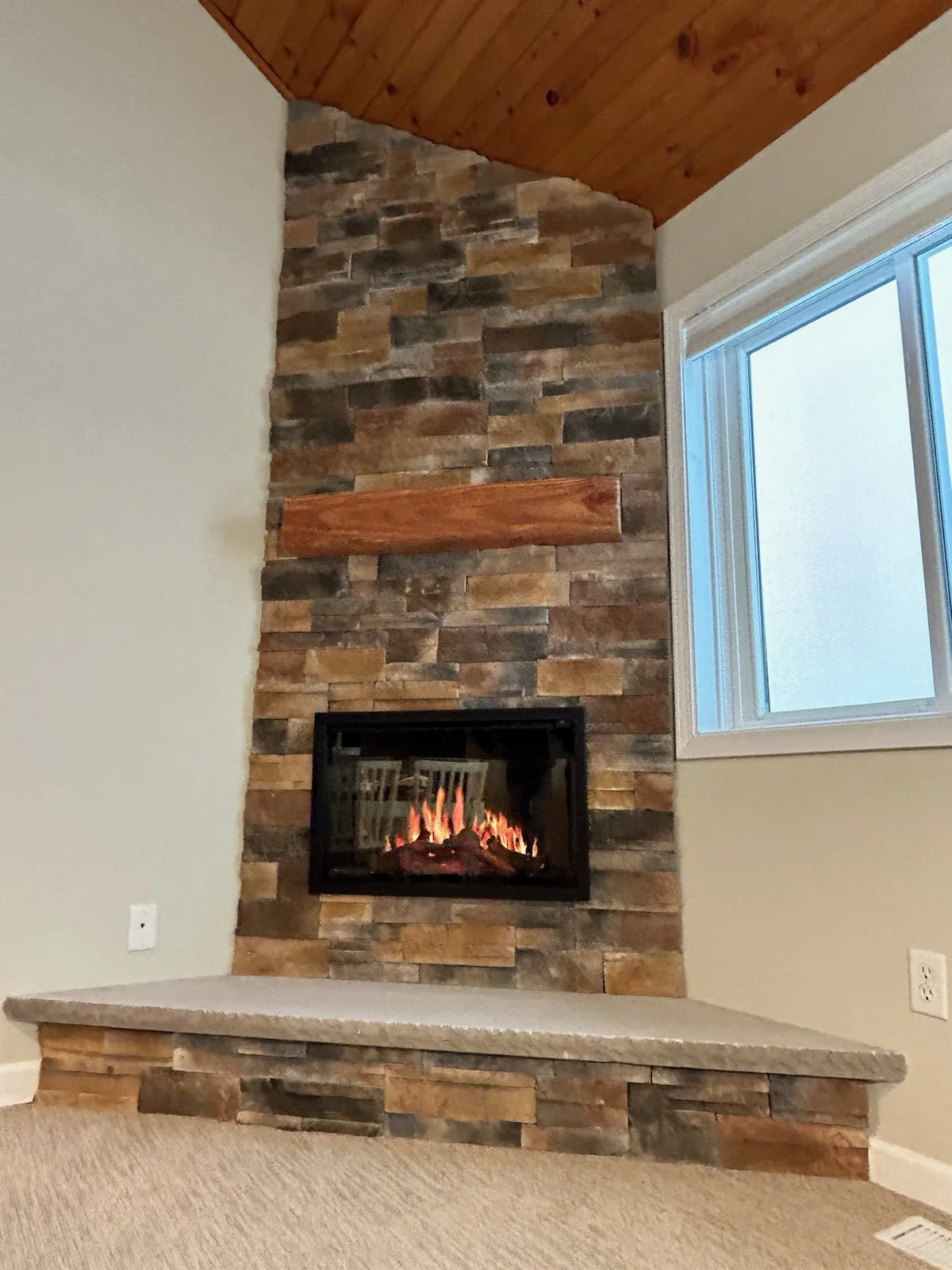
Natural vs. Cultured Stone at a Glance
| Natural Thin Stone Veneer | Cultured (Manufactured) Stone | |
|---|---|---|
| What it is | Real quarried stone, cut thin | Lightweight concrete cast to look like stone |
| Look | Authentic texture and natural variation | Consistent color and shape, many styles |
| Weight | Heavier | Lighter |
| Cost | Typically higher | Typically lower |
| Color over time | Color runs through the stone | Color is in the surface layer |
| Best for | High-end, authentic projects | Budget-friendly, lightweight applications |
Where Stone Veneer Works Best
- Fireplace surrounds, indoors and out
- Accent walls in living rooms, basements and bars
- Exterior wainscot and full exterior walls
- Columns and porch piers
- Kitchen islands and outdoor kitchens
- Foundation cladding to cover exposed concrete
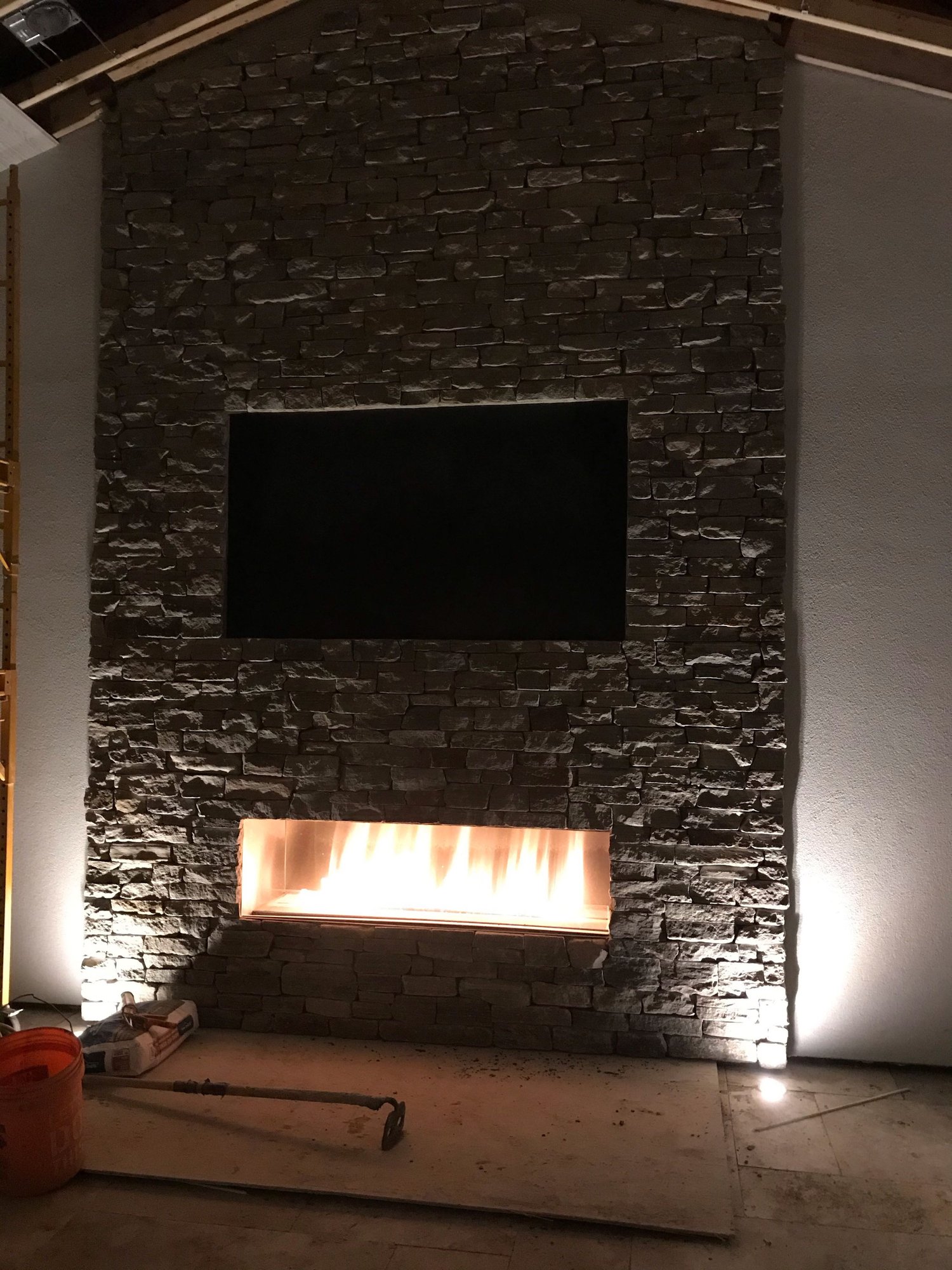
Interior Installations
Inside, stone is most often used on fireplaces and feature walls. The wall must be able to support the weight, and the surface must be prepared to the manufacturer's specifications. Around fireplaces, required clearances from the firebox and mantel must be followed.
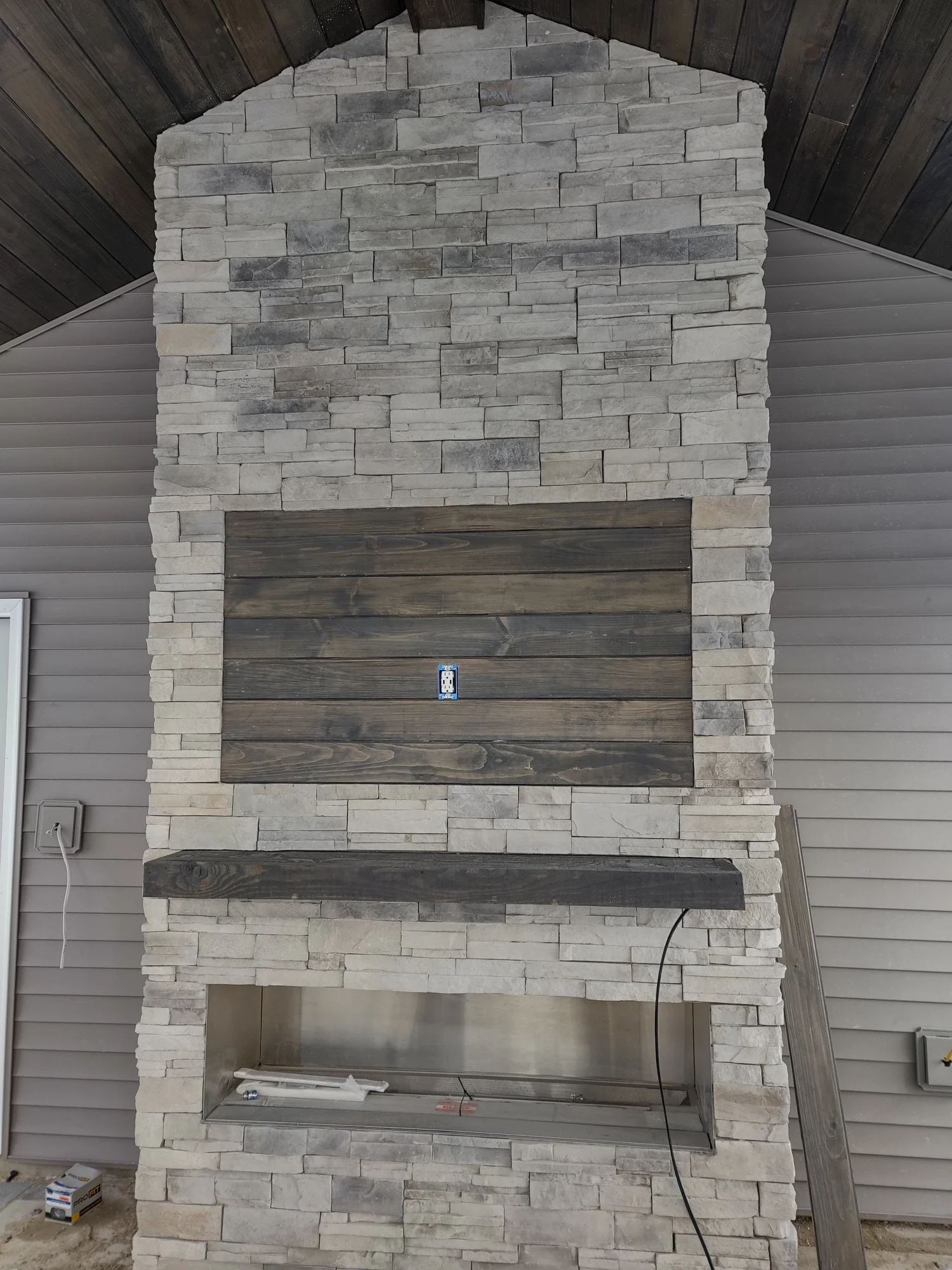
Exterior Installations in Central NY
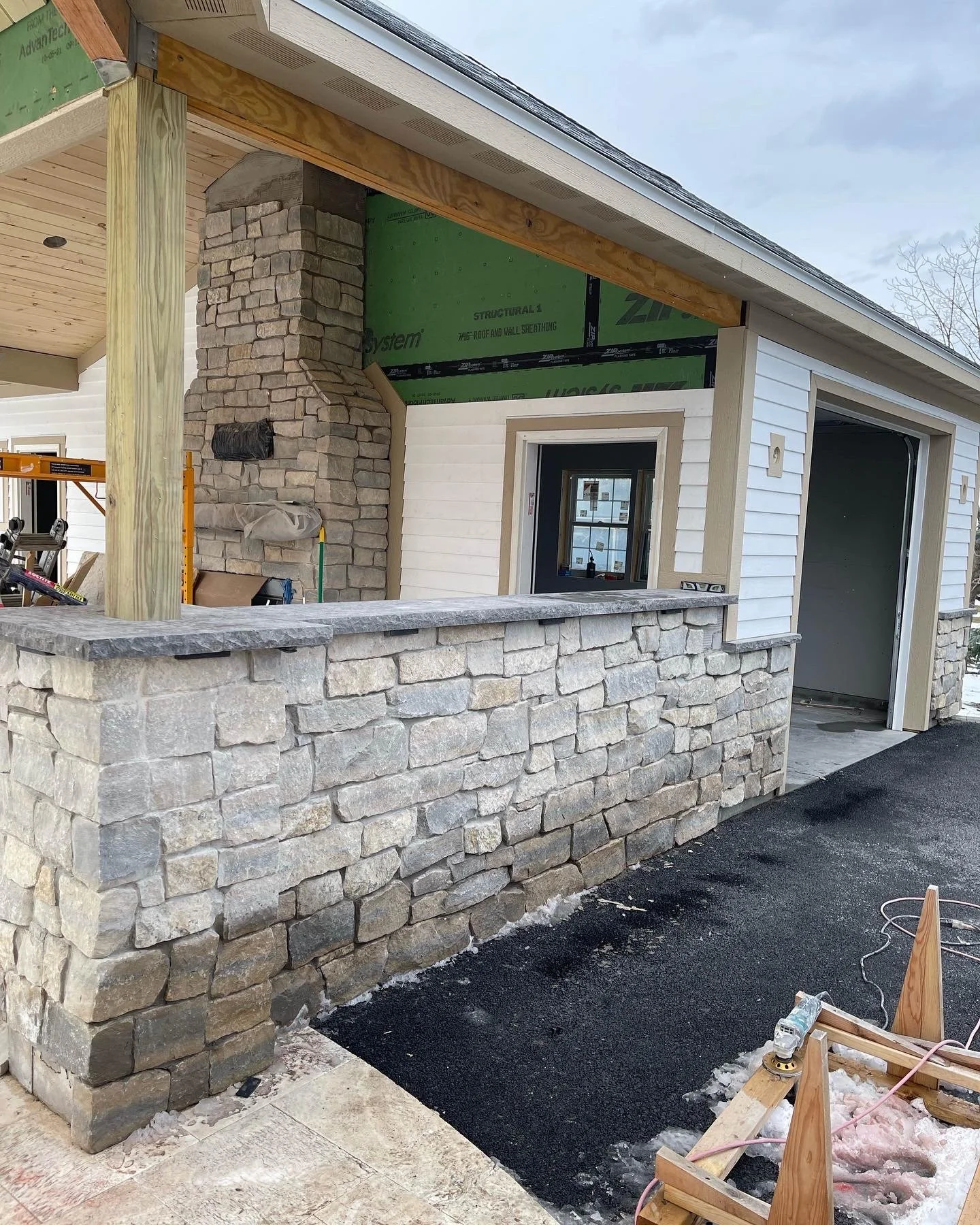
Outside, stone veneer has to handle rain, snow and freeze–thaw cycles. A long-lasting installation depends on details behind the stone:
- Water-resistive barrier over the sheathing
- Metal lath fastened correctly
- Scratch coat and mortar applied to manufacturer specifications
- Flashing at windows, doors and transitions
- Drainage at the base so trapped moisture can escape
- Proper clearance above grade, patios and roofs
Why details matter: Most stone veneer problems come from moisture trapped behind the stone, not from the stone itself. Ask any installer exactly how they manage water behind the wall.
Choosing a Stone Installer
Look for experience with both interior and exterior stone, attention to moisture management and photos of completed work. See our natural and cultured stone masonry and cultured stone installation pages for examples.
Frequently Asked Questions
What is cultured stone?
Cultured stone, also called manufactured stone veneer, is a lightweight concrete product cast and colored to look like natural stone. It's widely used on fireplaces, accent walls and home exteriors.
Is natural stone veneer better than cultured stone?
Neither is better for every project. Natural thin stone offers authentic texture and color variation. Cultured stone is lighter, often more affordable and very consistent. The right choice depends on your look, budget and application.
Can stone veneer be installed over drywall?
Interior stone veneer can be installed on properly prepared walls, but the wall must be able to support the weight and the substrate must be prepared to the manufacturer's requirements. We evaluate each wall before installation.
How do you keep exterior stone veneer from causing water damage?
Exterior stone needs a proper water-resistive barrier, lath, mortar, flashing and drainage details at the bottom so moisture can escape. These details, not the stone itself, are what protect the wall.
Can you add stone to my existing fireplace?
Yes. Refacing an existing fireplace with natural or cultured stone is one of the most popular ways to update a living room, as long as clearances to the firebox are followed.
Related Services
Add the Character of Stone
From fireplaces to full exteriors, we install natural and cultured stone across Syracuse and Central New York.
Request a Free ConsultationOr call 315-751-0540